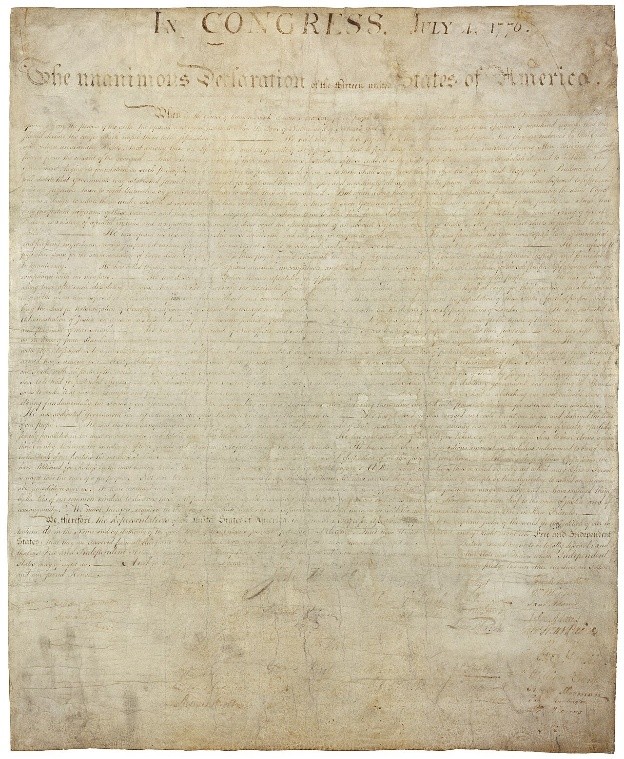
This year is the 250th anniversary of the signing of the American Declaration of Independence. Eton College Library holds a number of 18th-century pamphlets through which American independence was debated across the Atlantic. The collector of these was an Old Etonian who travelled to North America in 1778 as part of the diplomatic mission tasked with ending the American Revolution. Another Old Etonian of the same generation took a prominent role on the opposite side of the conflict, as a signer of the Declaration.
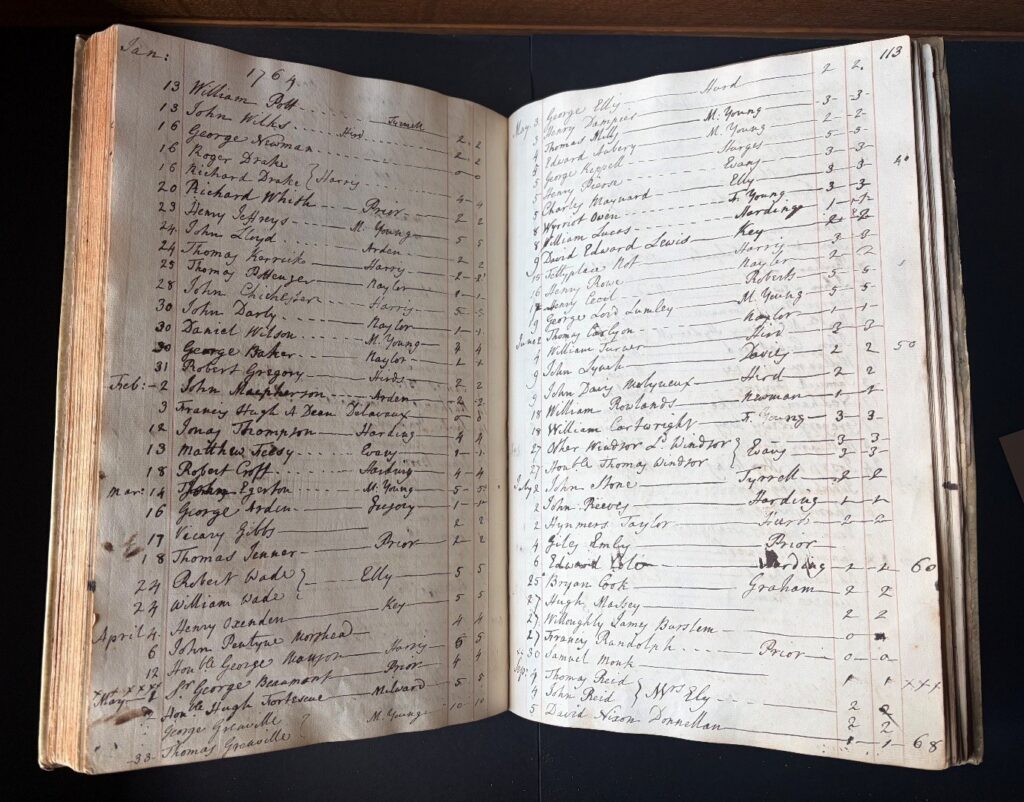
Etonian Signer of the Declaration
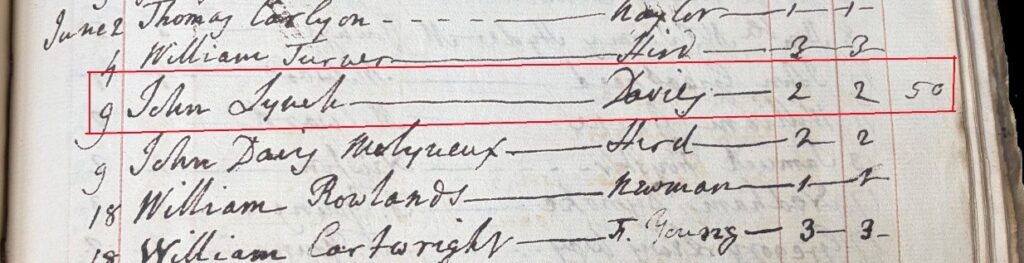
One of the youngest signers of the Declaration of Independence, Thomas Lynch, Jr. (1749-79) signed the document three days before his 27th birthday. Born in South Carolina, Lynch was sent to study at Eton and then at the University of Cambridge and Middle Temple. He returned home and later became a delegate to the Second Continental Congress. This book was kept by Dr Edward Barnard, Head Master of Eton, to record fees paid by the boys. Lynch appears here, incorrectly, as ‘John Lynch’.
Thomas Nelson, Jr. (1738-89), who signed the declaration on behalf of Virginia, is also said to have been educated at Eton. No evidence of his time at the college survives in the College Archives, however.
First British Edition of Common Sense
Thomas Paine’s pamphlet is considered America’s first bestseller. It transformed the idea of independence from a fringe notion into a popular revolutionary movement.
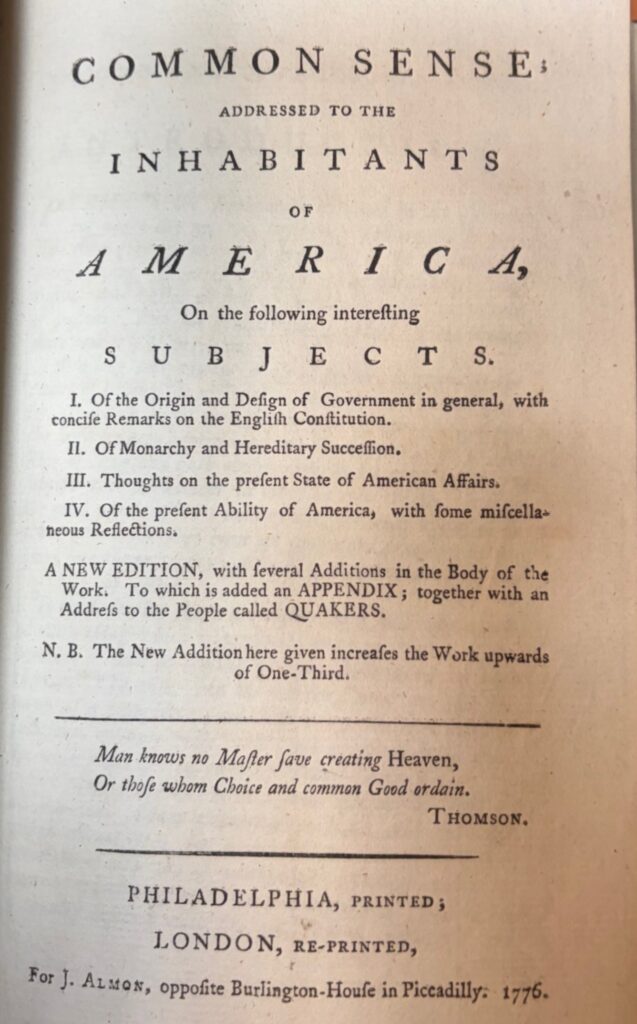
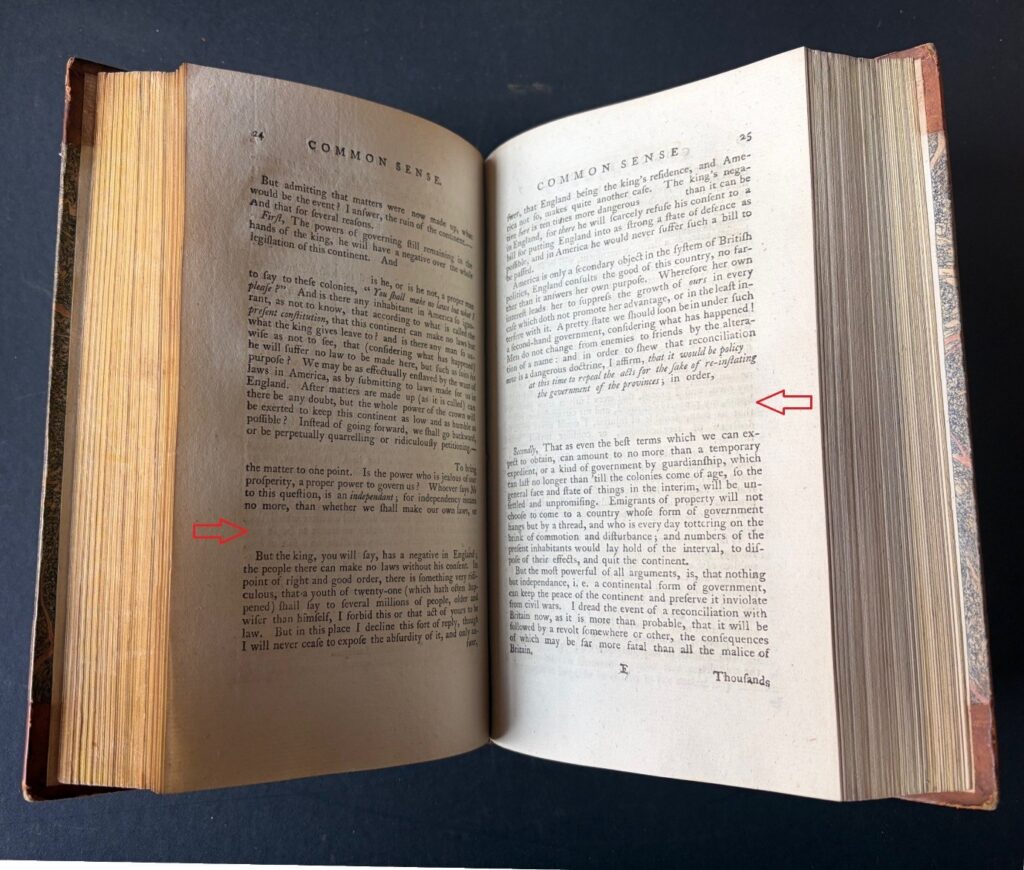
This edition appeared in June 1776. The London publisher issued a combined pamphlet pairing anonymous works: Common Sense and Plain Truth, a loyalist rebuttal. To avoid legal responsibility, he replaced the most provocative phrases from Common Sense with gaps in the print.
Rachel Bond, College Librarian