‘Milton! Thou should be living at this hour’ exclaimed the poet William Wordsworth at the turn of the 19th century. He was far from alone in making the association. The civil war era political writings of John Milton (1608-1674) include iconoclastic defences of killing a king, as well as of overthrowing parliament. In poetry he explored the nature of liberty, tyranny and rebellion. In the second half of the following century, these works resonated with republicans and revolutionaries in Britain, France and North America. Several books in College Library show aspects of the 18th-century reception of Milton’s writings.
Paradise Lost
Saa4.8.04
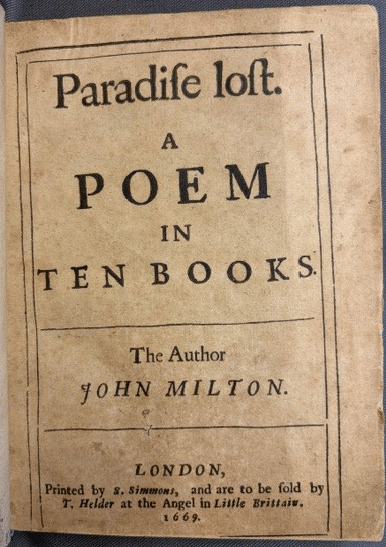
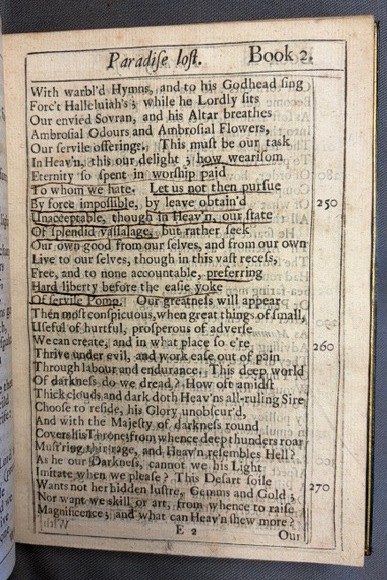
John Milton, Paradise Lost, A poem in ten books, London, printed by S. Simmons, 1669 (Saa4.8.04)
Milton’s magnum opus was not an instant bestseller. By the end of the 17th century, however, Milton’s masterpiece had achieved wide recognition as England’s national epic and the greatest long poem in English. An early annotator of this copy had a particular interest in Book II, in which rebel angels debate their strategy following defeat in a war with God.
Paradise Lost
Saa4.8.04
Le paradis perdu
Fn.2.09-10
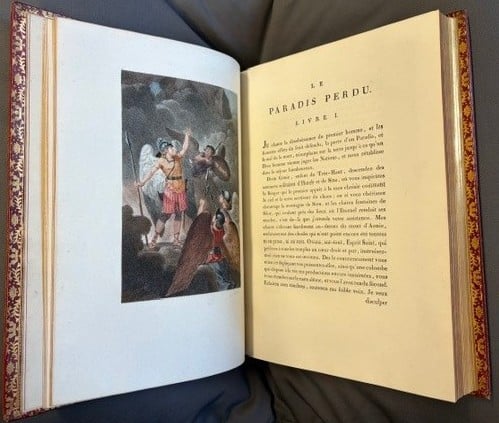
John Milton, Le paradis perdu, Paris: Defer de Maisonneuve, 1792 (Fn.2.09-10)
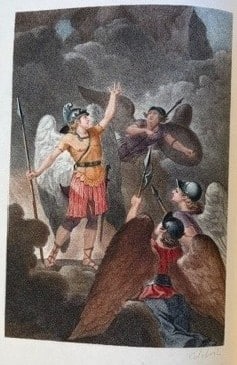
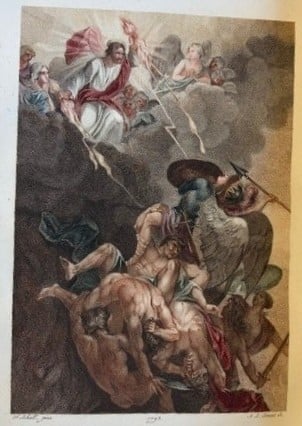
This sumptuous, two-volume edition of Paradise Lost was printed during the most tumultuous year of the French Revolution. It is a very early example of colour printing in Europe, using a process in which each engraved plate was coloured by hand before the impression was taken. The illustrations are after paintings by Frédéric Schall (1752-1825), which have been seen as seen not as taking up radical themes but as a lament for the ancien régime.
Image from Le paradis perdu
Fn.2.09-10
Image from Le paradis perdu
Fn.2.09-10
The Life of John Milton
Cr.4.1.13
John Tolland, The Life of John Milton, London: A. Millar, 1760 (Cr.4.1.13)
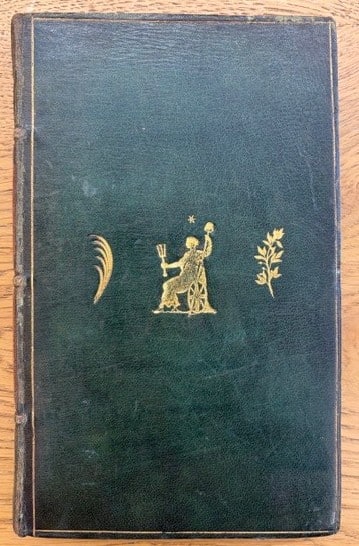
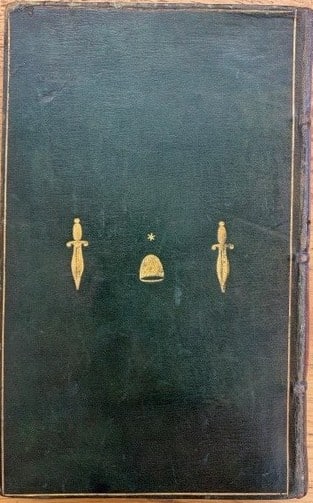
The editor of this edition was Thomas Hollis (1720-74), who was in the habit of presenting libraries in Britain and America with books that furthered his republican principles. Hollis had these books bound using specially commissioned tools with carefully chosen emblems. This binding shows swords flanking a liberty cap and a star on one board, with other symbols, including the figure Britannia, elsewhere.
The Life of John Milton
Cr.4.1.13
Rachel Bond, College Librarian