Displacement, Captivity and Justice in WW2
College Library’s recent display, Beyond the Front Lines: Displacement, Captivity, and Justice, brings together material from two new acquisitions alongside items from our newly catalogued collection of Second World War ephemera. Rather than focusing on battles and military strategy, the display explores the lived experience of war: evacuation, imprisonment, propaganda, survival, and the search for justice once the fighting ended.
These documents and objects remind us that war is experienced far beyond the battlefield. At a time when conflict continues to shape lives in Ukraine, Sudan, Gaza and Iran, the traces left behind from the 1940s speak powerfully of war’s enduring impact on ordinary people – their fear and resilience, and their determination to endure.
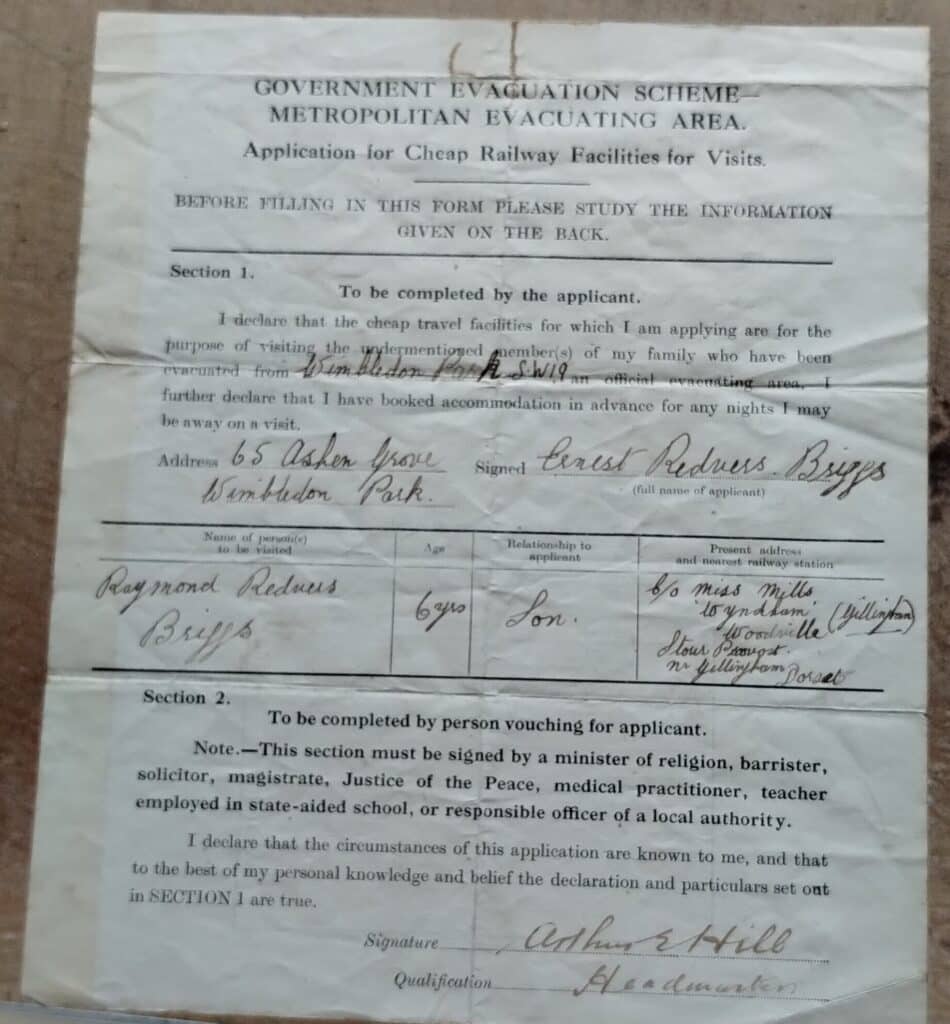
The story begins on the British home front in the early years of the war. Official Ministry of Information and Civil Defence instructions reveal how civilians were prepared for the possibility of invasion, while an application for travel permission highlights the disruption caused by mass evacuation. One particularly poignant example is the application submitted by Ernest Briggs, a milkman from Wimbledon, seeking permission to visit his six-year-old son Raymond, evacuated to Dorset in 1939. Raymond Briggs would later become one of Britain’s most celebrated illustrators, known for The Snowman and When the Wind Blows. In Ethel and Ernest (1998), he reflected on his parents’ wartime experiences, transforming family history into a wider meditation on the impact of war on everyday life.
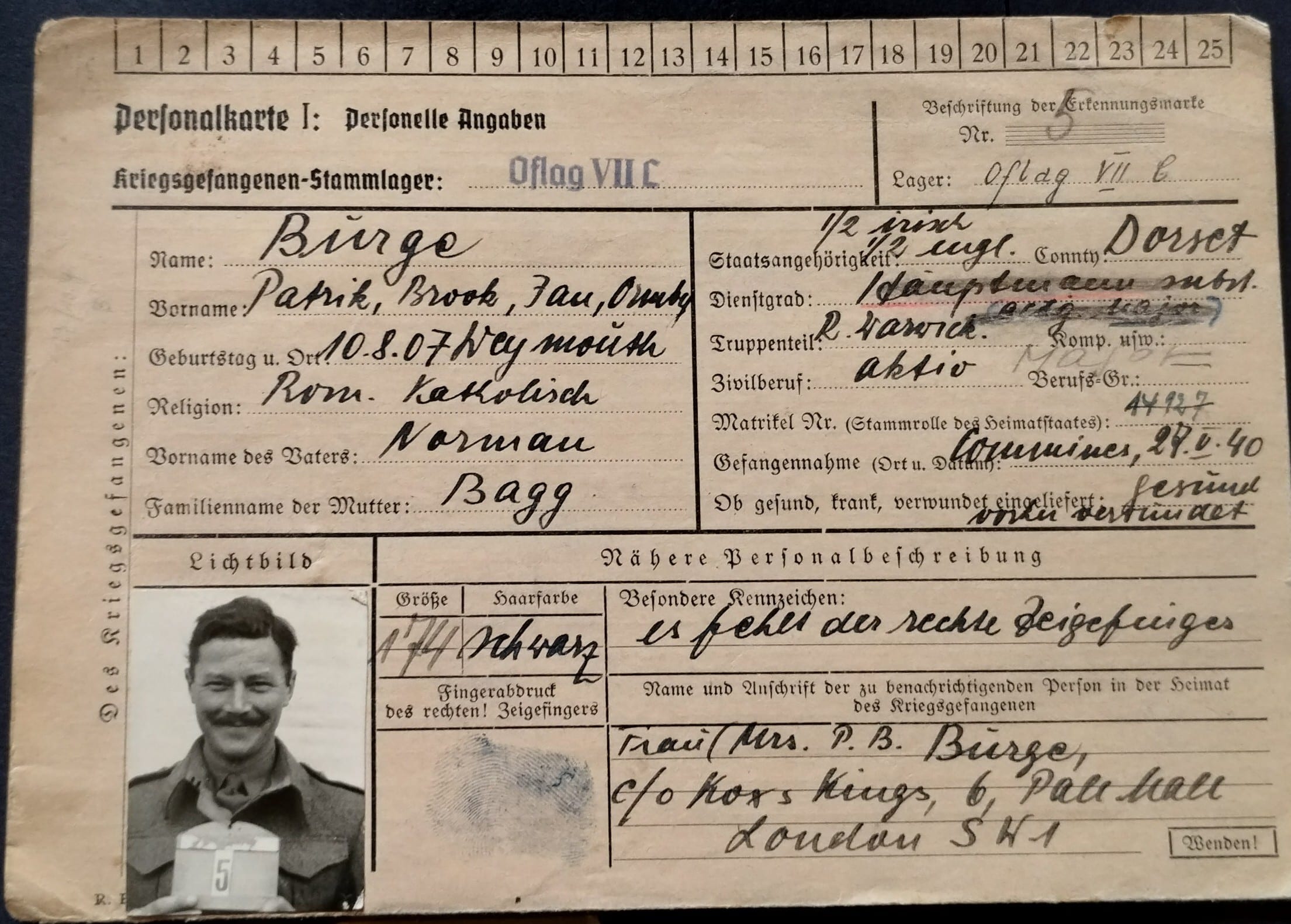
The display then moves from civilian disruption to military captivity. The papers of Major Patrick Brook Ian Ormsby Burge of the Royal Warwickshire Regiment document nearly five years spent as a prisoner of war after his capture in Belgium in May 1940. Held in four German PoW camps, including Tittmoning Castle and Moosburg, Burge’s collection records both endurance and the routines of daily life in captivity. Awarded the Military Cross after liberation, his story speaks of courage, survival, and the psychological toll of prolonged imprisonment.
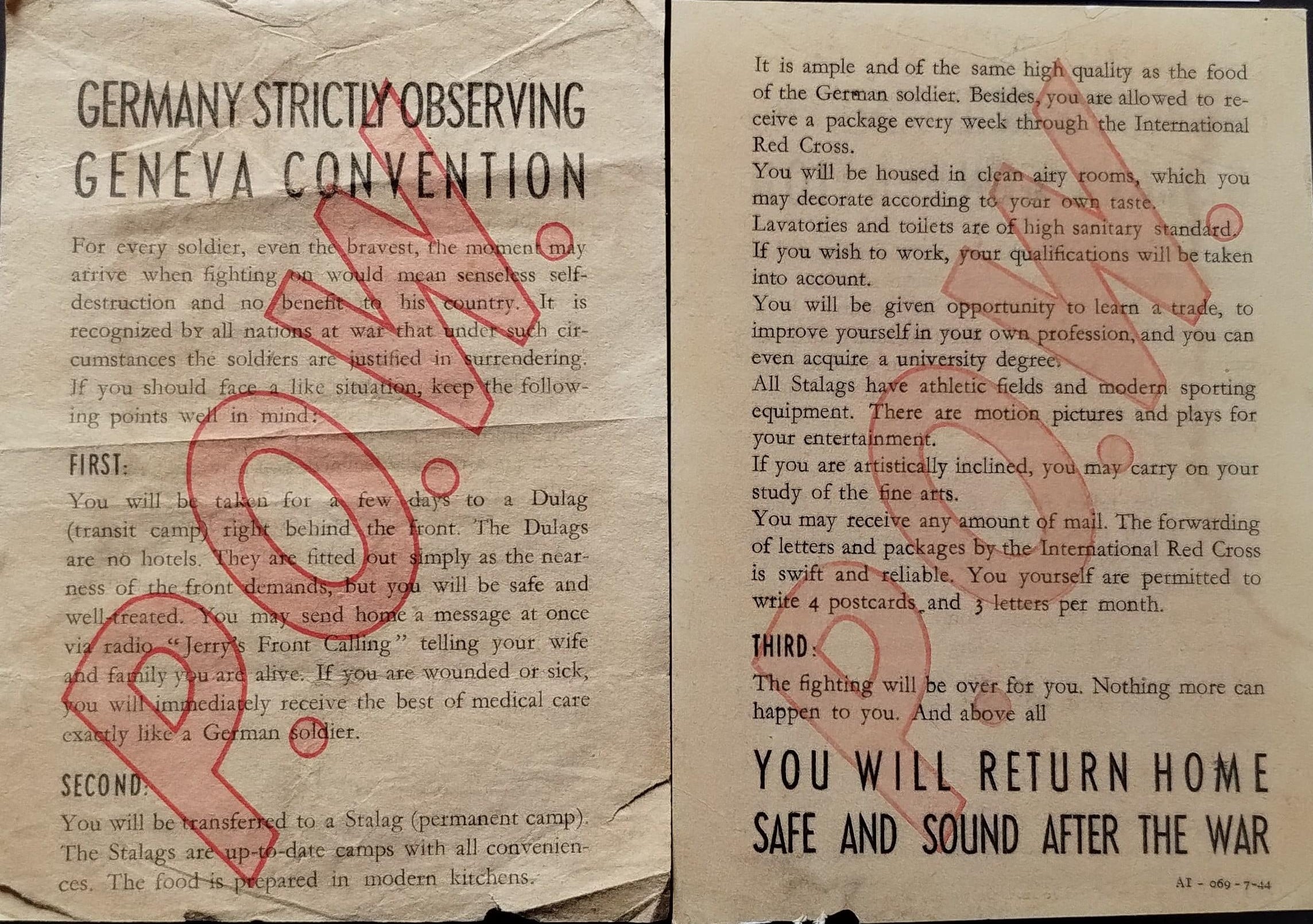
Propaganda and deception are represented by a Nazi leaflet dropped in July 1944, promising Allied soldiers humane treatment under the Geneva Convention if they surrendered. While international law was invoked as reassurance, reality often differed sharply. Conditions varied widely, and systematic abuses were inflicted on Soviet, Polish, Jewish, Black, and Asian prisoners, revealing how legal language could be manipulated as a weapon of war.
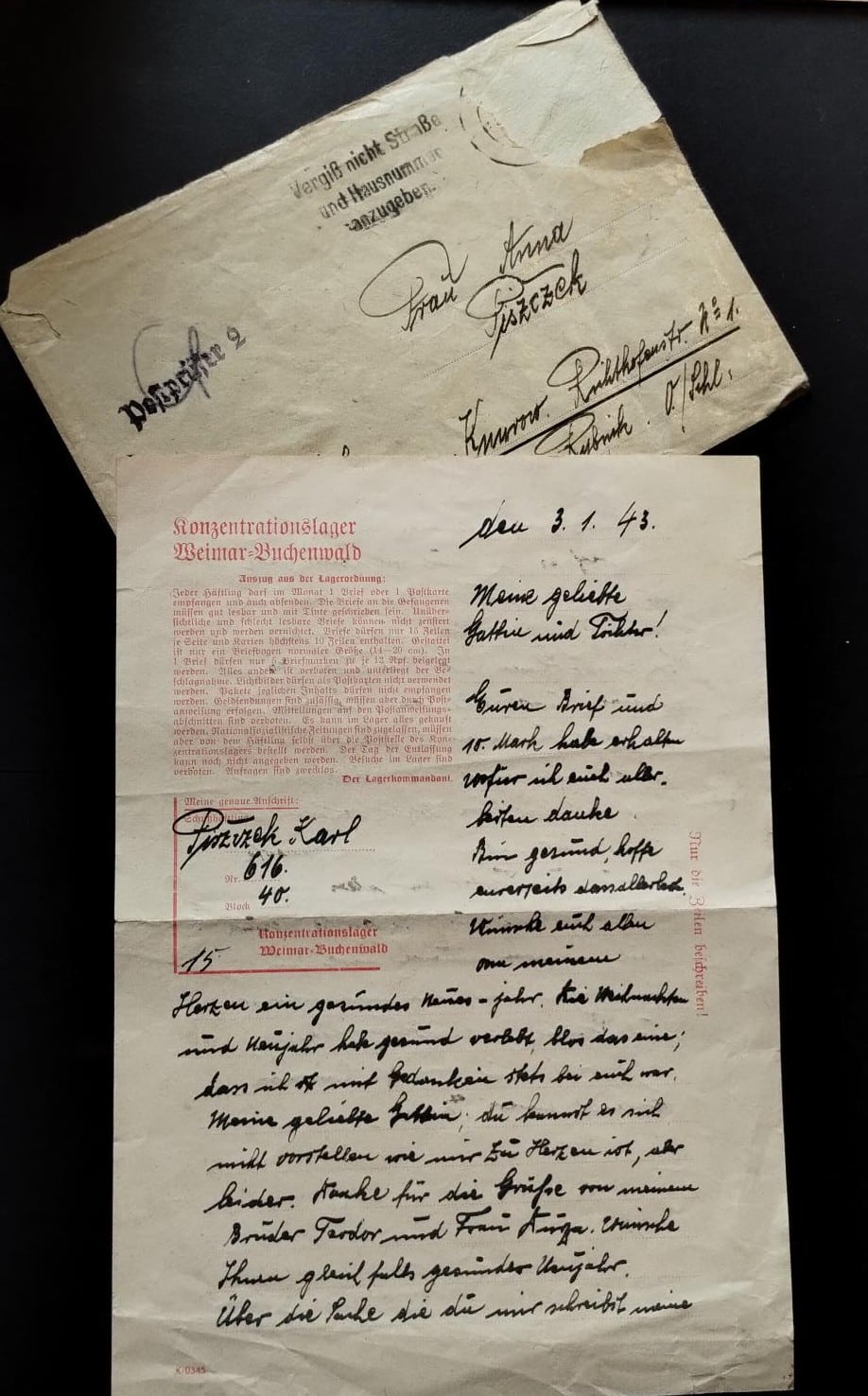
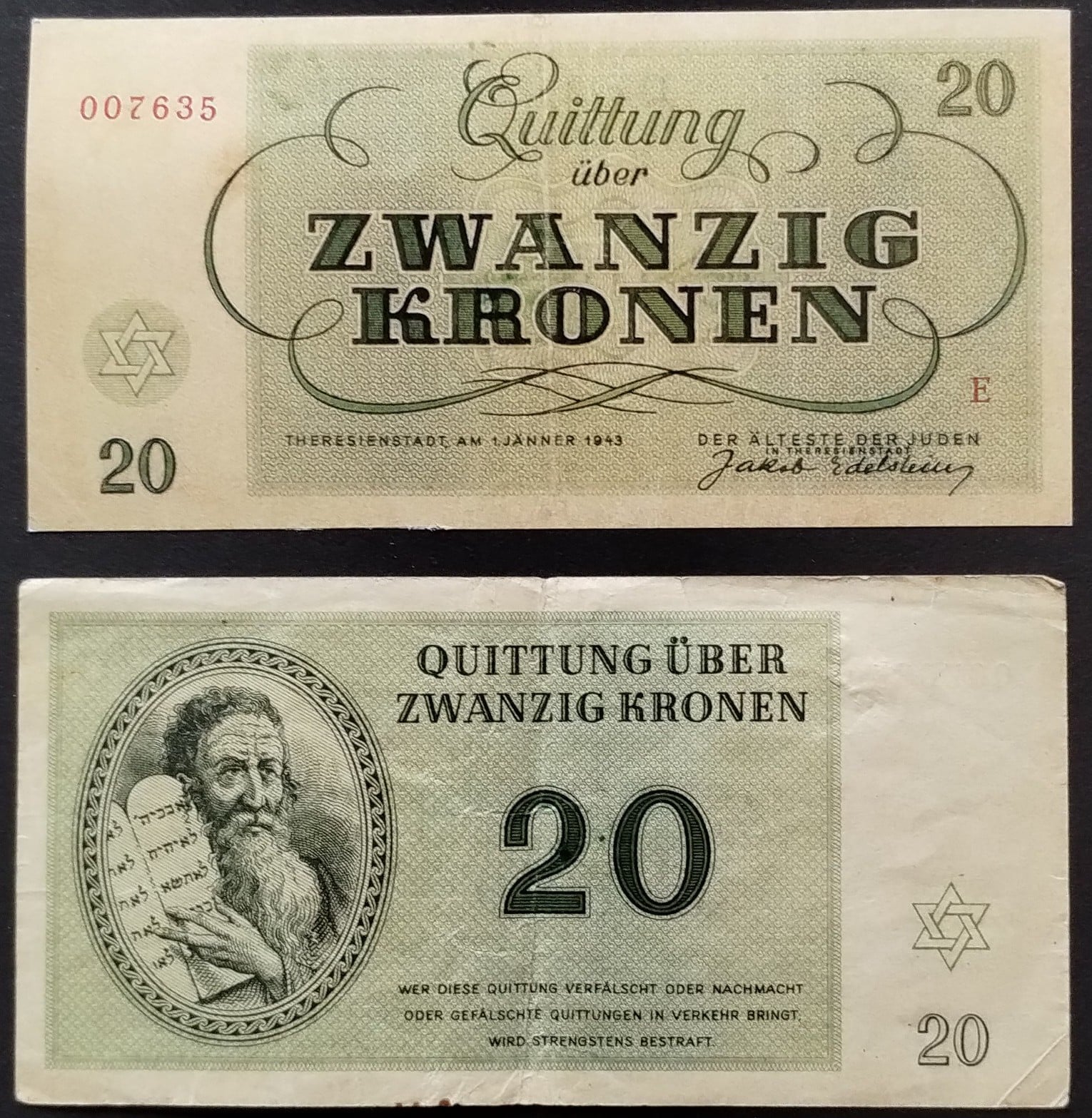
The most harrowing items come from the Nazi camp system. A letter written in January 1943 by Polish political prisoner Karl Piszczek from Buchenwald concentration camp offers a rare moment of family connection amid extreme suffering. His fate remains unknown. Alongside this is so-called ‘ghetto money’ from Theresienstadt, a propaganda tool designed to disguise starvation, forced labour, and deportation behind the illusion of normality.
Papers of a Prisoner of War
MS 930 05
Collection of documents and photographs relating to Captain Patrick Burge, a British Army officer, interned in prisoner of war camps in Germany.
Papers on Internment Camps
MS 930 05
Information leaflet given to new prisoners of war, 1944
Letters from Concentration Camps
MS 930 06
Letter from Karl Piszczek, an inmate in Buchenwald concentration camp
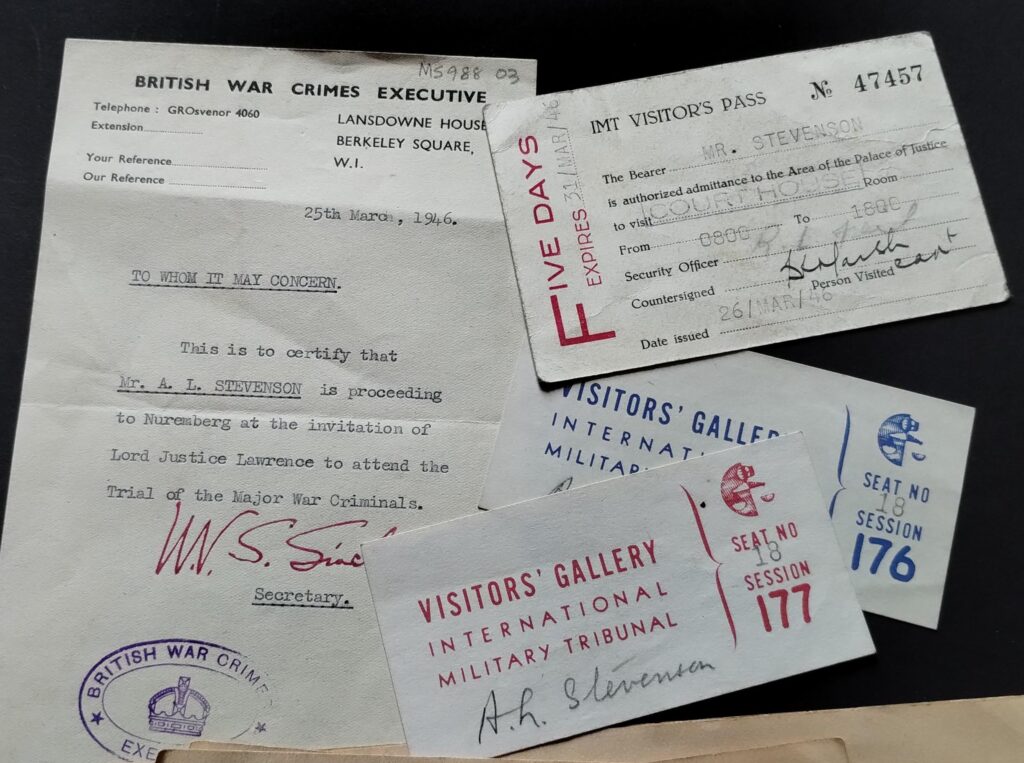
The display concludes with materials relating to the Nuremberg Trials. In March 1946, British barrister Alan Leslie Stevenson attended the proceedings as a guest of the lead British judge. His papers capture a moment when the international community attempted, for the first time, to hold individuals legally accountable for crimes committed on a global scale – an imperfect but historic step towards justice after unimaginable violence.
Together, these fragments offer not a single story, but many human stories, reminding us that the consequences of war extend long after the guns fall silent.
Jill Geber, Project Archivist