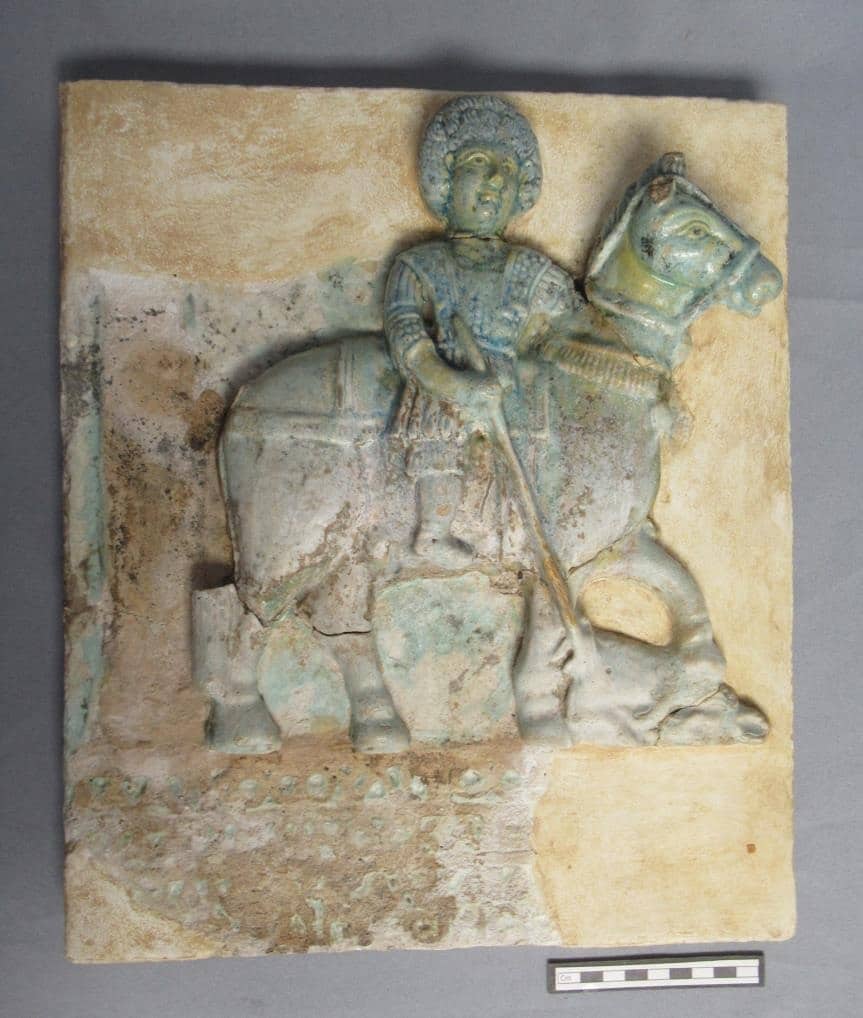
Housed in the Museum of Antiquities (MoA) is a glazed ceramic relief, thought to be of St Mercurius [ECM.2166-2010]. It depicts a mounted saint holding a long spear as his horse tramples a fallen figure beneath its feet, and is part of a larger bequest of items given by Major William Joseph Myers OE (1858-1899), Adjutant of the Eton College Rifle Volunteers and collector of antiquities.
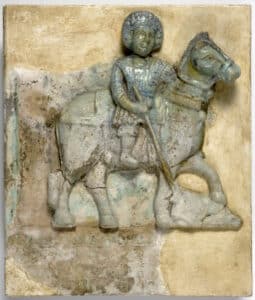
Mercurius was a gallant Roman soldier of Scythian (modern day Iran) descent who is venerated as a Christian saint and martyr. Said to have lived from 224-250AD, he is known in Coptic and Arabic traditions as Abu-Sayfain (“the wielder of two swords”) and has long been worshipped as a warrior saint. The fallen figure depicted beneath the horse’s raised foreleg is almost certainly Emperor Julian the Apostate (331-363AD), who Christian tradition states was slain by Mercurius in battle.
Although it is difficult to give a precise date of construction for this item, the high-relief modelling of both the saint and the horse is more typical of medieval mould-made ceramic reliefs than earlier Byzantine examples, and depictions of him on horseback were very common in Coptic churches between 11 and 14AD. A faience relief of this saint would most likely have been made as a devotional and decorative object and the amount of restorative work over the years indicates it would have come into heavy use.
Although much of the original decoration survives, the tile has suffered significant damage over its lifetime. Previous restorative work was evident around the tile and was probably carried out decades ago. The most significant problem was the horse’s head. As one of the most prominent parts of the object, it projects upwards from the surface and is therefore especially vulnerable to accidental knocks or scrapes. The adhesive used in the previous repair had failed, leaving the head detached and unstable.
Plaster fills had been added after the head was originally reattached, but did not fully support the ceramic underneath. Dirt had also become trapped within the break lines over time, while tiny fragments of glaze, ceramic, and painted plaster had become loose around the damaged area. It was therefore sent to an external conservator for attention.
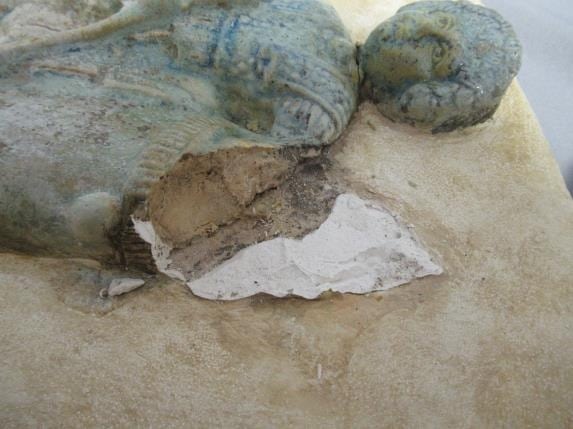
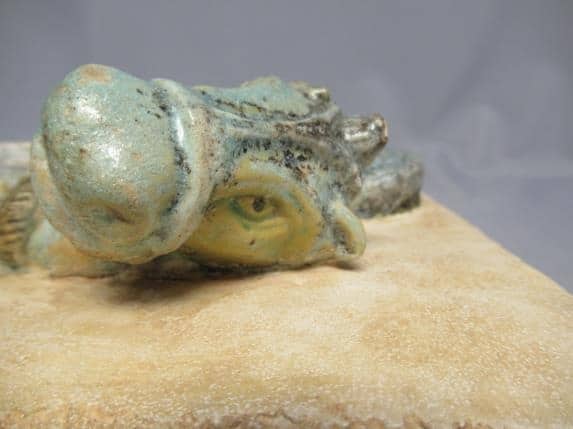
During treatment
The loose horse head was removed during treatment, revealing the extent of plaster fills
Close up of horse head
After treatment
Small, detached pieces at break edge at underside were consolidated
After treatment
The conservator ensured that the detached fragments of glaze, ceramic, and painted plaster were retained and reattached to their original positions where possible. Exposed break edges were sealed to stabilise them before reassembly. The detached horse’s head was then carefully reattached, along with the associated ceramic, glaze, and painted plaster fragments. Areas of loss and gaps along the break edges, particularly where previous painted plaster fills had deteriorated, were filled. These fills were then in-painted with acrylic paints to match the surrounding reconstructed surfaces. Finally, small detached glaze fragments were secured back into place to complete the treatment and improve the overall appearance of the object.
This careful conservation will help to ensure the long-term preservation of this remarkable example of medieval Coptic ceramic art.
Joe Hill, Museum Curator