Eton College and King’s College Cambridge were established by Henry VI as sister institutions who would continually support and help each other. King’s would be supplied with students from Eton, with the Provost of King’s coming annually to Eton to elect suitable scholars from the older boys to continue their studies at Cambridge, as well as choosing younger boys to take the newly vacant place at Eton. In addition, the Statutes of Eton College reserved Fellowships at Eton to Fellows of King’s, further increasing the co-dependency. In this way, the governing body of Eton would be entirely made up of Kingsmen, while the student body at King’s would be entirely made up of Etonians.
In 1636 this privilege was threatened by the King himself, when Charles I decided to reserve an Eton Fellowship for the Vicar of Windsor in perpetuity as a way to appease the parishioners who were seeking more money for their minister. This document, signed and sealed by Archbishop Laud, is the order of the Archbishop of Canterbury that at least five of the seven Fellows of Eton were to be elected from King’s College, Cambridge [ECR 39/170]. This would give some flexibility, while maintaining the majority stake of King’s College.
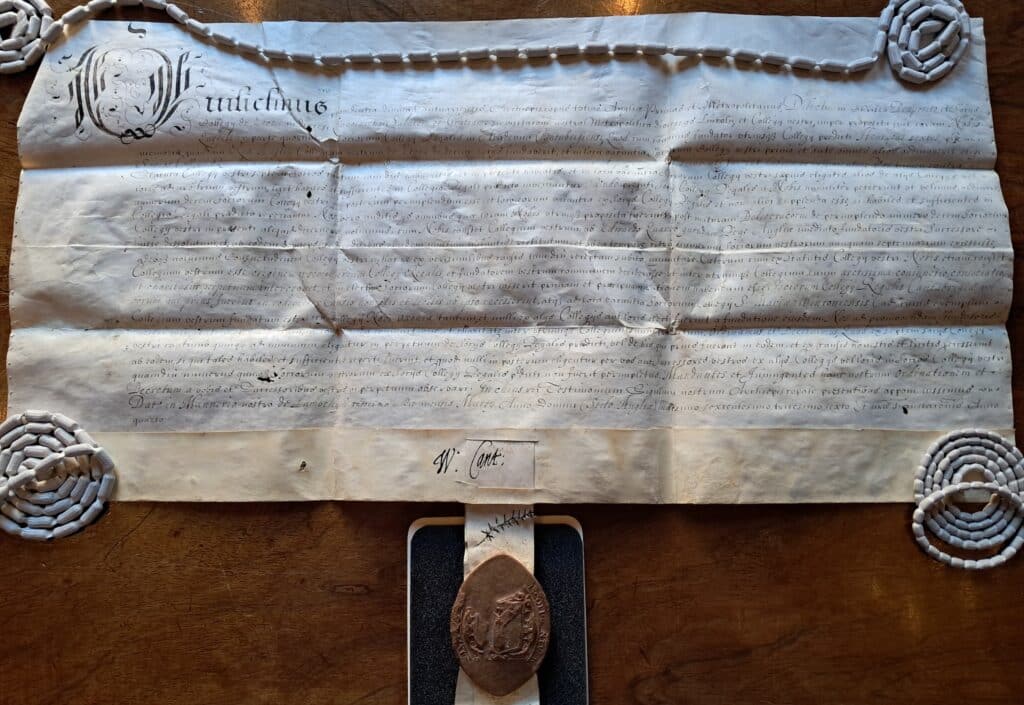
The Civil War and Charles II’s need to reward loyal followers after the Restoration made this order largely redundant and 40 years later, the Kingsmen again had cause for complaint. Even though the order had been confirmed in 1670 [ECR 39 173], in 1677 a Fellowship was given to Henry Godolphin. Not only was Godolphin not a Fellow of King’s, but worse, he was a graduate of Oxford. King’s College petitioned the Archbishop once more to enforce the order of his predecessor.
This second, beautifully decorated, confirmation of the order [ECR 39 174] was made at the request of King’s College so that Eton would not forget again.
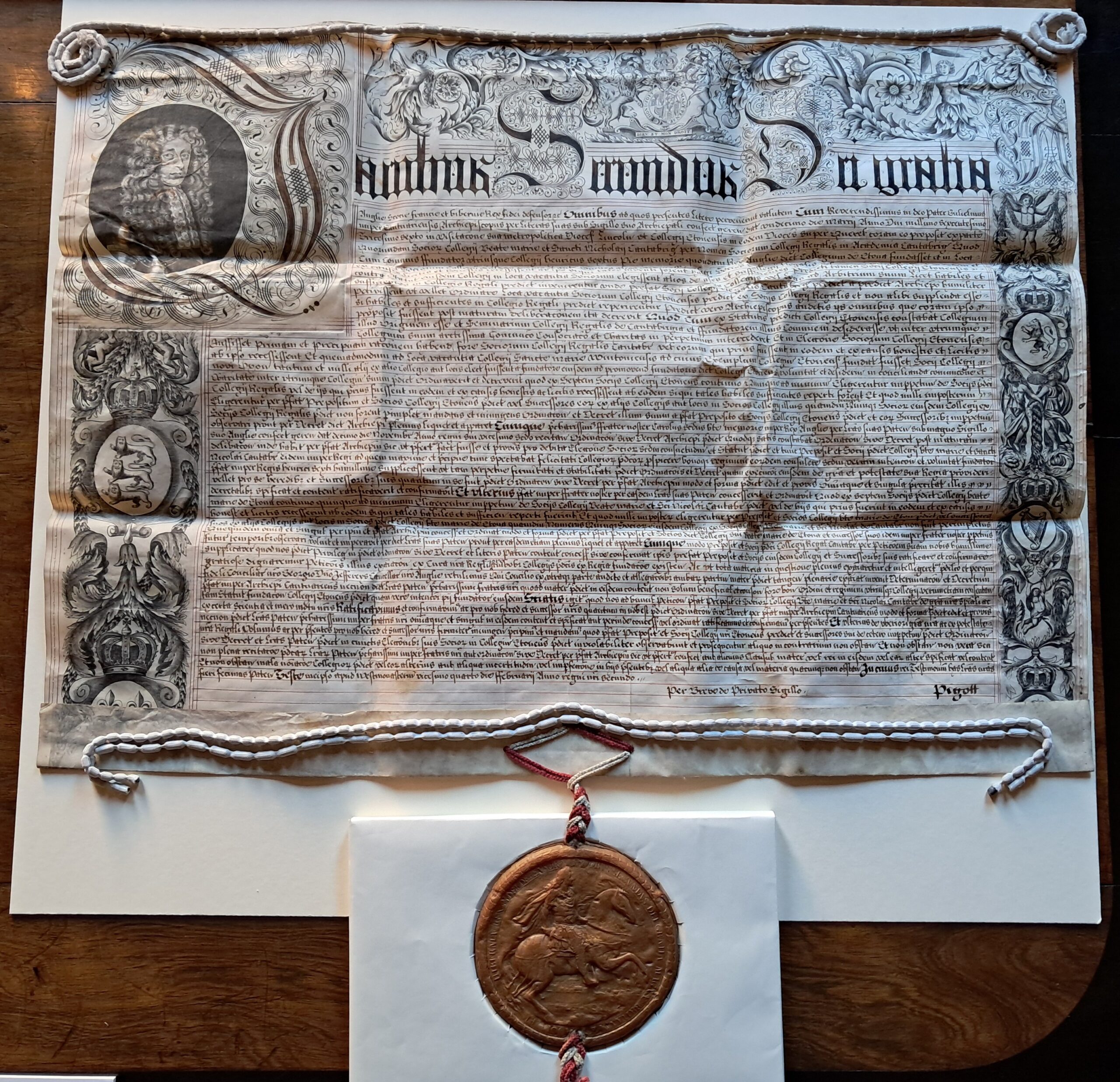
Confirmation of the ordinance, 24 February 1686
ECR 39 174
Confirmation of the ordinance of Archbishop Laud, 11 March 1636/7. Given at Westminster, by privy seal. ECR 39 174
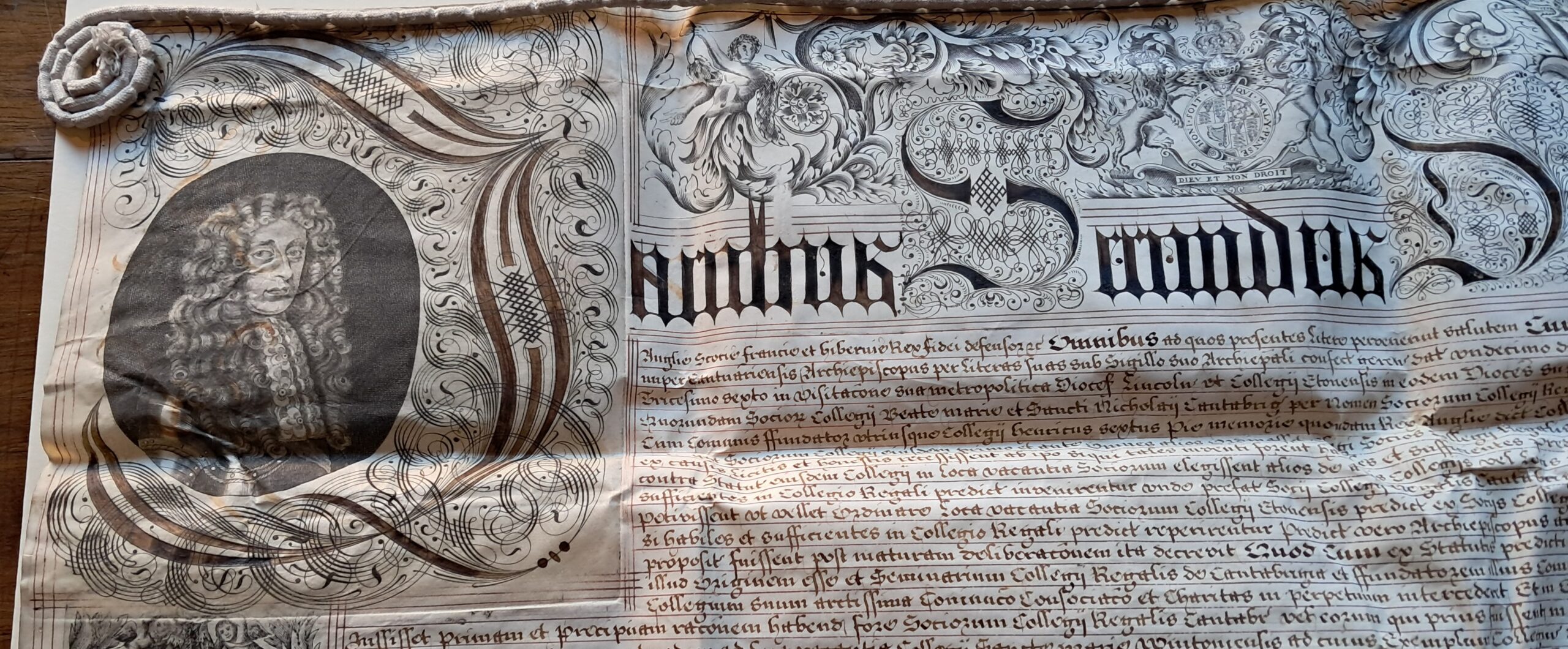
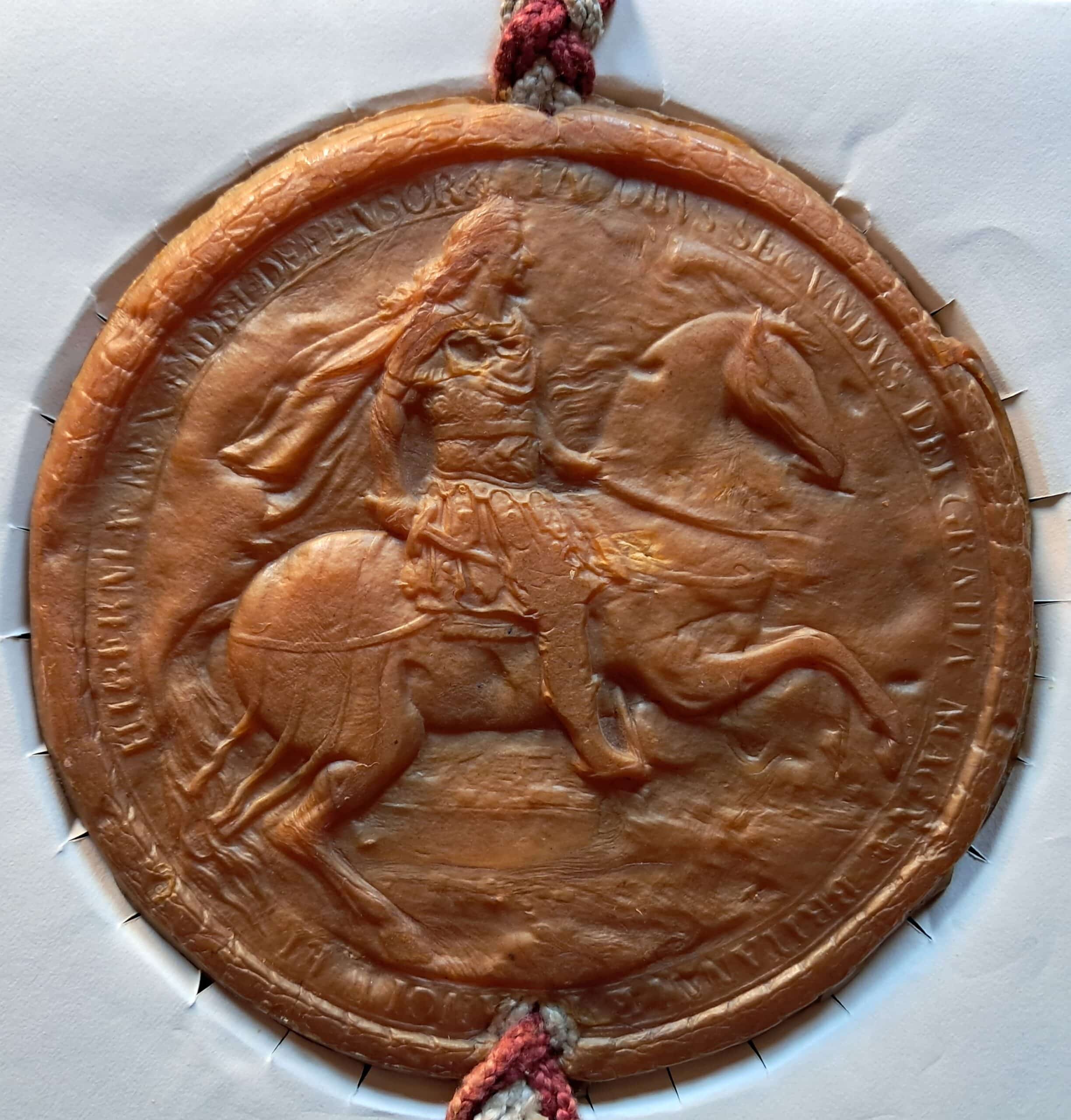
The Great Seal, natural coloured wax, on plaited red and white silk cords. Engraved portrait of the King in the initial letter and engraved ornamental border.
Engraved image of James II
Equestrian side of the Great Seal of James II
Eleanor Hoare, College Archivist